
The Princeton Care
Evening coursework support for international school students
International School
Admissions differ from school to school, but international schools commonly look at an English writing sample, an interview, prior school records, and recommendations. Of these, the writing and the interview are the two that cannot be prepared by memorizing. They are not grammar tests. They ask whether a student can form a view in English on a question such as “Why do you want to come to this school?” and hold it in front of an adult who asks again. For exact requirements, the admissions office of the school you are applying to is the authority. This program is where students in Grades 4 to 9 build that foundation, the ability to state a claim, revise it, and say it aloud, in the manner of The Harvard Crimson’s newsroom.
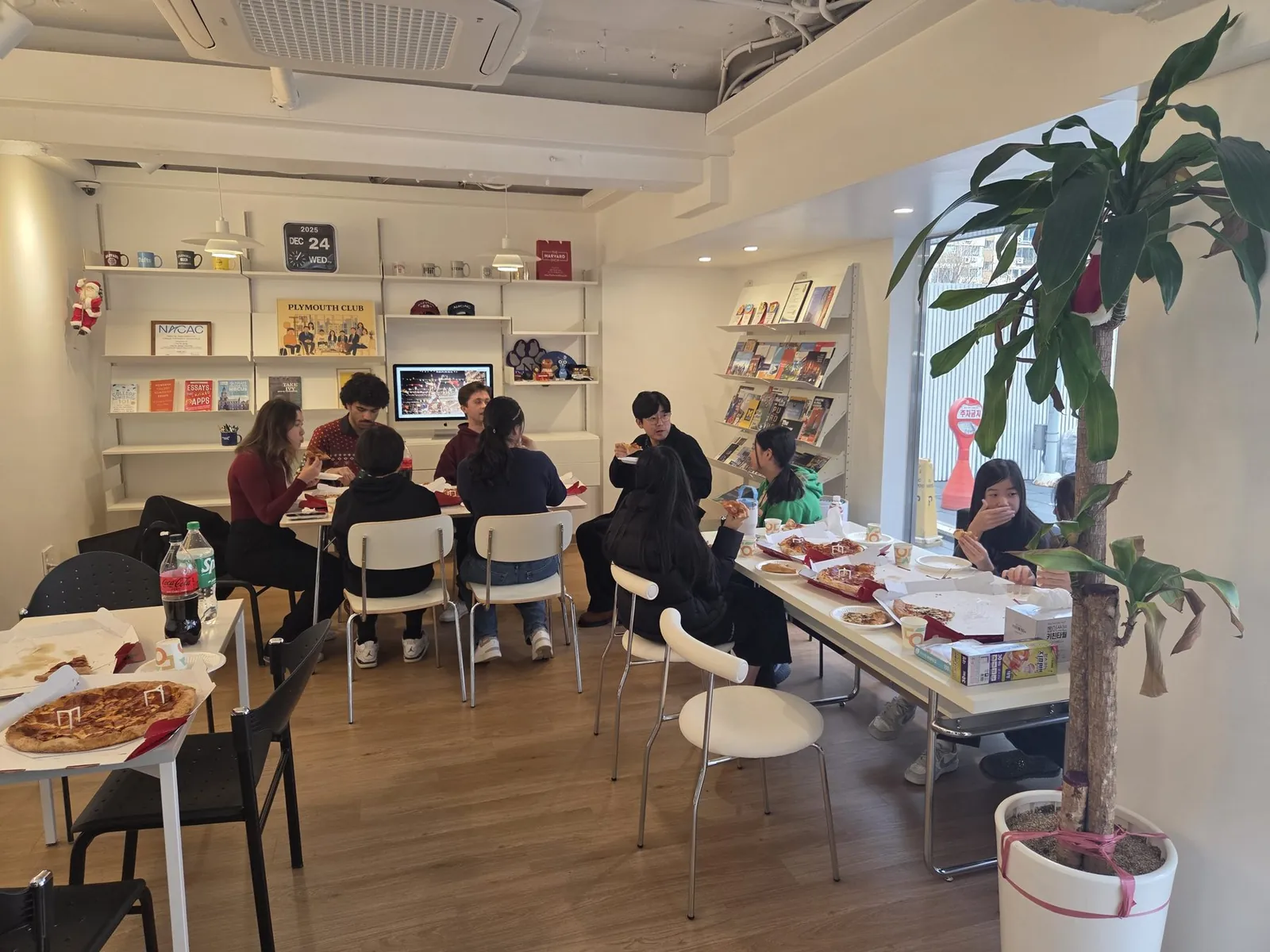
Admissions
| Element | What it shows | Can it be prepared in advance? | In this program |
|---|---|---|---|
| English writing sample | Whether the student can state a claim and its evidence in English | Not by memorizing | Stage two, Write |
| Interview | Whether the student answers in their own words, and holds the answer when asked again | Not by memorizing | Stage three, Speak |
| Prior school records | Attitude to study | Everyday grades | Not applicable |
| Recommendations | A teacher’s assessment | Everyday conduct | Not applicable |
The elements and their weighting differ by school. Please check the guidance of the admissions office of the school you are applying to.
Interview
Many students arrive with a memorized admissions essay and memorized interview answers. One further question from the interviewer and it gives way, because there is no answer to “Why do you think so?”
A student who has asked themselves what the evidence is, what the strongest objection is, and whether it can be answered, replies in their own words even when the question changes direction. That is why this program trains critical thinking at the first stage.

After Admission
This program does not write school assignments for students. It makes the method second nature (state a claim, place the evidence, revise) so that the student can write whatever is assigned. The day-to-day management of assignments and test schedules is handled by The Princeton Care, run by The Princeton Review Korea, part of the same company.
Evening coursework support for international school students
Grade by Grade
| Grade | What to work on now | In this program |
|---|---|---|
| Grades 4 to 5 | Giving one opinion in English in a single sentence, with one reason | The three questions are practiced aloud, then carried into short pieces of writing |
| Grades 6 to 7 | Finishing one draft on an admissions essay topic | The draft is revised in response to feedback |
| Grades 8 to 9 | Turning the revised essay into interview answers, and answering follow-up questions | Presentation, debate, and the video portfolio |
It is safer to begin at least a semester before applying. Essays and interviews are not made in a few weeks.
Where to Prepare
In the Seven-Week Online Class, students build, revise, and present their writing every Saturday with the Harvard Crimson newsroom curriculum. During the break there is the Two-Week Winter Camp at the Apgujeong campus. If the goal is a US boarding school, see boarding school admissions.
FAQ
Read Next
Leading US boarding schools read the SSAT score for eligibility, and the essay and the interview for the student.
Presentation, speech, and debate are not memorized phrasing. They are the defense, aloud, of an argument first built in writing.
An essay states a claim in one sentence, supports it with evidence, and answers the objection.
An English writing class for Grades 4 to 9, built on the official Harvard Crimson partner curriculum, in which students revise their own drafts.
Next Step
Send us the grade, the school you have in mind, and one recent piece of English writing. At consultation we will tell you where to begin.
Leave the student’s name, grade, and a contact number. We will be in touch with the full curriculum and schedule. A recent piece of English writing helps, though it is not required. If you prefer KakaoTalk, you are welcome to message our channel directly.
A member of our team will review your note and be in touch. If the matter is urgent, please message our KakaoTalk channel.